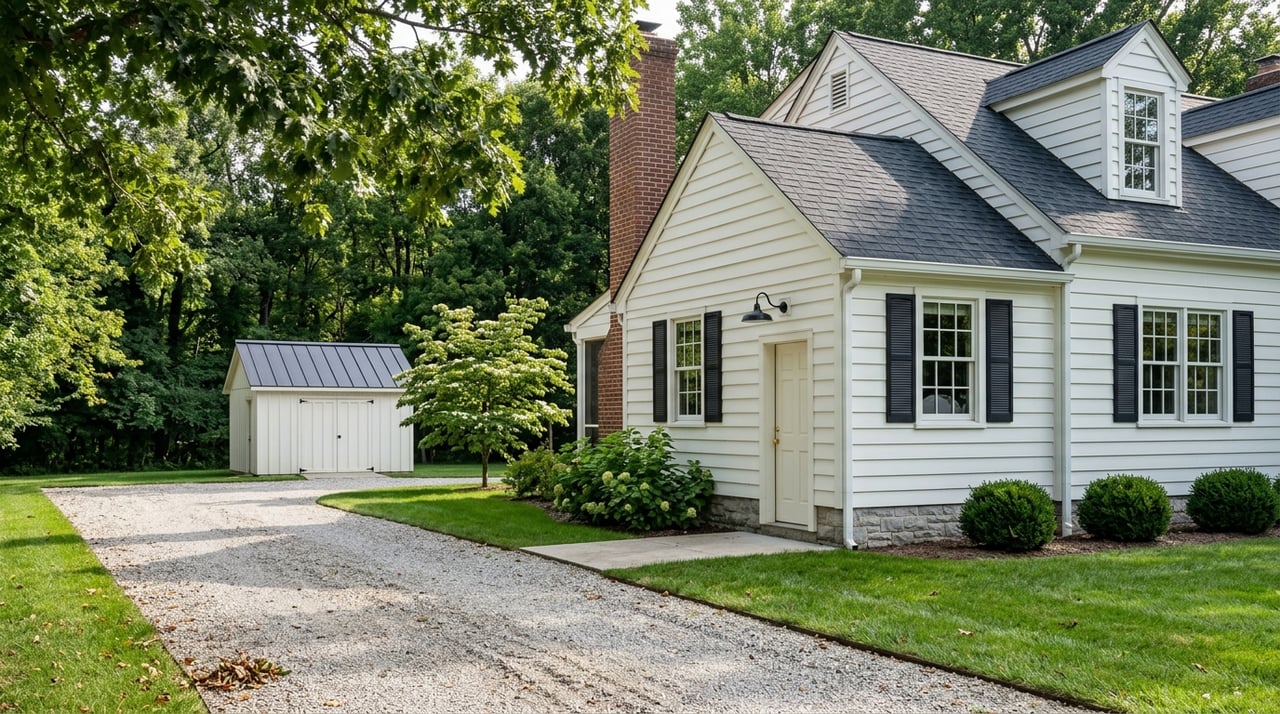
Buying a Home With Land in Buckner: What to Check
July 2, 2026
July 2, 2026
Buying a home with land in Buckner can feel like a dream come true, until you realize that acreage brings a different set of questions than a typical neighborhood home. You may be picturing privacy, space for a shop or barn, and room to spread out, but you also need to know how the land works, how the utilities are set up, and what the county allows. The good news is that with the right due diligence, you can buy with confidence and avoid expensive surprises later. Let’s dive in.
A home with land is not just a house with a bigger yard. In Buckner, the value of an acreage property often depends on usability, access, drainage, and utility systems just as much as the house itself.
That matters in today’s market. In May 2026, Buckner had 29 homes for sale, a median listing price of $563,000, and a median of 41 days on market. Oldham County showed a median sale price of $488,535, a 33-day median time on market, and a 99.0% sale-to-list price, with 26.1% of homes selling above list.
That tells you something important. Buyers are still active, but properties with land tend to be more selective purchases, which means the details behind the acreage can affect value and resale more than you might expect.
Before you fall in love with the setting, look closely at how the land functions day to day. A beautiful parcel is not always the same thing as a practical parcel.
Usable land is usually easier to enjoy and easier to resell. If the acreage is steep, wet, oddly shaped, or hard to reach, the buyer pool may be smaller when it is time to sell.
Some parcels look larger on paper than they feel in real life. Open areas, level ground, and easy access often matter more than total acreage.
As you evaluate a property, think about how you would actually use it. Space for outbuildings, gardens, recreation, parking, or future improvements can add value, but only if the land supports those uses.
More land often means more upkeep. That can include mowing, trimming, ditch work, culvert upkeep, and making sure access stays manageable in changing weather.
Oldham County’s road department lists mowing, ditch work, culvert replacement, storm cleanup, and snow removal among its regular responsibilities on county roads. For you as a buyer, that is a reminder to pay close attention to road frontage, drainage paths, ditches, and driveway conditions around the property.
One of the biggest differences with a home on land is the utility setup. In Buckner and Oldham County, you should confirm early whether the property uses public water, a private well, or a cistern, and whether it uses public sewer or an onsite septic system.
These details affect both your ownership costs and your confidence in the property. They also matter when you compare one acreage home to another.
If the property is not on public water, do not treat that as a minor detail. Kentucky’s Division of Water says private wells and cisterns should be tested annually for bacteria and other contaminants, and all well work must be done by a Kentucky Certified Water Well Driller.
The state also notes that nearby land use and improperly constructed or maintained septic systems can affect groundwater quality. That means you should ask not only what the home uses, but also for any available testing history and service information.
If the home has onsite sewage, the Oldham County Health Department handles septic permitting. The county notes that a permit and a drawing of the proposed septic system are required for a new system.
Before closing, ask for:
Acreage homes can be very appealing, but a poorly documented septic system can quickly become a source of stress. Clean records and clear maintenance history can help protect both your purchase and future resale value.
If the property is connected to public sewer, Oldham County Water District says sewer fees are billed on the water bill, while sewer questions go to Oldham County Sewer Company. Even when a home is on public sewer, it is still smart to confirm the setup and understand how the service reaches the house across a larger lot.
On bigger parcels, meter placement, buried lines, and easements matter more than many buyers expect. Utility installations in the public right-of-way require county engineer approval, and that can affect future site work.
Access is one of the most important parts of buying a home with land. You never want to assume a long driveway, road frontage, or private lane works the way you think it does without checking the records.
Oldham County distinguishes between state highways, county roads, city streets, and private roads. That difference matters because maintenance responsibility and future improvement options may depend on the type of road serving the property.
With the exception of city streets and private roads, Oldham County says other roads are county maintained, while state highways fall under the Kentucky Transportation Cabinet. If a property sits on or near a private road, you will want to understand who maintains it and whether that arrangement is documented.
The county also notes that private roads can later be accepted into the county road maintenance system. Still, that is not something you should assume will happen automatically for a property you are buying.
The county right-of-way can include more than the paved road. It may also include ditches, sidewalks, street signs, and utilities.
That matters if you are thinking about widening a driveway, changing a culvert, removing trees near the road, or adding utility connections. Before you assume a property has unrestricted access, verify the plat, survey, and any recorded easements.
It is easy to picture all the things you might do with acreage. Maybe you want an accessory building, a pool, a barn, or room for future improvements.
Before you make those plans part of your buying decision, confirm the zoning. Oldham County Planning and Development is the county’s land-use agency, and the county’s review process includes zoning confirmations, variances, conditional uses, map amendments, and planned unit development pathways.
A larger lot does not automatically mean full flexibility. Zoning and land-use rules can affect what structures you can add and how the property may be improved.
That is especially important if you are choosing between two homes based on future plans. A tract that fits your goals on paper may need approvals before those ideas become reality.
Some buyers like the idea of buying more land now and dividing it later. In practice, that is usually not an informal step.
Kentucky’s subdivision statute covers many land divisions, and Oldham County has separate applications for minor plats, record plats, consolidation plats, and major subdivision review. In other words, the recorded plat matters a lot, and lot size alone does not tell the whole story.
If you want to add a barn, driveway, pond, or other site improvements after closing, make sure you understand what approvals may be needed. On larger tracts, post-closing projects can involve more review than buyers expect.
Oldham County says site-development plans may be required, and a stormwater quality management and erosion control permit is generally needed for residential, commercial, and industrial construction projects, with limited exceptions. Additional permits can also be triggered by land disturbance over 1 acre, stream work, or floodplain work.
That does not mean your plans cannot work. It simply means you should evaluate them early, while you are still deciding whether the property is the right fit.
Even if you plan to stay for years, resale still matters. The strongest acreage properties in Buckner tend to be the ones that combine privacy and space with practical features buyers can understand quickly.
In this market, a well-located property with usable acreage can hold a premium. At the same time, unusual tracts, poor drainage, or access issues can narrow the buyer pool and slow resale because land-heavy homes appeal to a more specific group of buyers.
As you compare homes with land, these traits often help a property stand out:
These are not flashy features, but they are the details that often protect value. They also make the property easier to explain and market later.
Buying a home with land involves more moving parts than many standard home purchases. You are not just evaluating the house. You are also evaluating systems, records, access, land use, and long-term maintenance.
That is where having an advisor with strong transaction knowledge can make a real difference. When you know what questions to ask early, you can move forward with more clarity and fewer surprises.
If you are considering a home with land in Buckner, working with a local expert can help you sort through the property details, compare options with confidence, and stay focused on what fits your goals best. When you’re ready to start your search or talk through the right next step, connect with Ken Ransdell.
Stay up to date on the latest real estate trends.


Trust him for down-to-earth, expert real estate guidance in Louisville. His local market savvy, strong negotiation skills, and personalized service make your buying or selling experience clear, confident, and rewarding—reach out to him today.