Buying Goshen KY Large Lot Homes and Acreage
April 2, 2026
April 2, 2026
Looking for more elbow room without giving up convenience? In Goshen and nearby parts of Oldham County, a larger lot can offer a very different buying experience than a standard subdivision home. If you are considering acreage or simply a home with more land, it helps to know what matters before you make an offer. Let’s dive in.
Goshen and nearby communities sit in a part of Oldham County known for its open-space character, rolling land, and rural roots. According to Oldham County Planning and Development, the county’s mission includes balancing growth with greenspace preservation while honoring that history.
That local context matters when you shop for a larger parcel. In this area, more land is not only about a bigger backyard. It is often part of a broader landscape shaped by agricultural land, wooded areas, water features, and lower-density development patterns.
Goshen’s official city information places it near scenic Highway 42 and Harmony Lake, about six miles north of Prospect. Oldham County tourism also highlights the county’s outdoor and rural appeal, including horse-farm tours and nature-focused attractions, which helps explain why buyers are drawn to larger-lot properties here.
A larger lot can mean very different things depending on the parcel, zoning district, and available utilities. In Oldham County, acreage alone does not tell the full story.
For example, Oldham County’s zoning ordinance states that in the AG-1 Agricultural/Residential District, the minimum lot area is 43,560 square feet. It also sets frontage and width standards, including 150 feet for lots under 2.5 acres and 300 feet for lots 2.5 acres or larger.
Several residential districts also return to a 43,560-square-foot minimum when sanitary sewers are not available. That means a property can look spacious on paper but still need a closer review for lot shape, frontage, width, and utility access.
If you are buying on a larger lot in Goshen or nearby areas, zoning should be one of your first checks. It can affect what exists on the property today and what may be possible later.
The county ordinance explains that some districts are intended to support agriculture and limit urban-style development until utilities can be efficiently provided. It also notes that conservation and residential districts may be designed to protect wooded areas, watercourses, wildlife habitat, and water supplies.
For buyers, the takeaway is simple: the parcel itself matters more than assumptions. Two homes with similar acreage may come with different rules depending on their zoning district, available infrastructure, and site conditions.
Many buyers focus on total acreage first, but frontage and width requirements can be just as important. A parcel may have the right total size while still raising questions if the layout is narrow, irregular, or affected by easements.
This is one reason larger-lot purchases often need more upfront review than a typical subdivision home. A careful look at the zoning classification and lot standards can help you avoid surprises after contract.
A common point of confusion is the difference between public rules and private rules. County zoning and subdivision covenants are not the same thing.
Oldham County’s zoning ordinance states that county zoning staff and boards do not have standing to interpret or enforce subdivision restrictions or covenants. In plain terms, that means a property may comply with zoning while still being limited by deed restrictions, HOA rules, or other private agreements.
Before you buy, make sure you review both. A zoning check alone is not enough if the property is part of a subdivision or subject to recorded restrictions.
On larger lots, utility questions often shape both the buying process and future ownership costs. You should confirm utility service early, not after inspections begin.
Oldham County Water District serves the area, and Louisville Water also notes service in Oldham County through retail service and provider partnerships. Still, utility availability is not uniform from parcel to parcel.
You will want to confirm:
If sanitary sewer is not available, zoning standards can become more restrictive. That makes sewer status a key detail when evaluating a larger parcel.
With more land comes more responsibility to understand the site itself. Access, drainage, floodplain considerations, and grading potential all matter.
According to Oldham County Building & Inspections, the county engineer also serves as the stormwater coordinator and floodplain administrator. The county also has a stormwater quality management program and requires erosion-control permits before land-disturbing work begins.
That is especially important if you are thinking ahead about improvements such as:
A property that feels ready for those projects may still require additional approvals or site work.
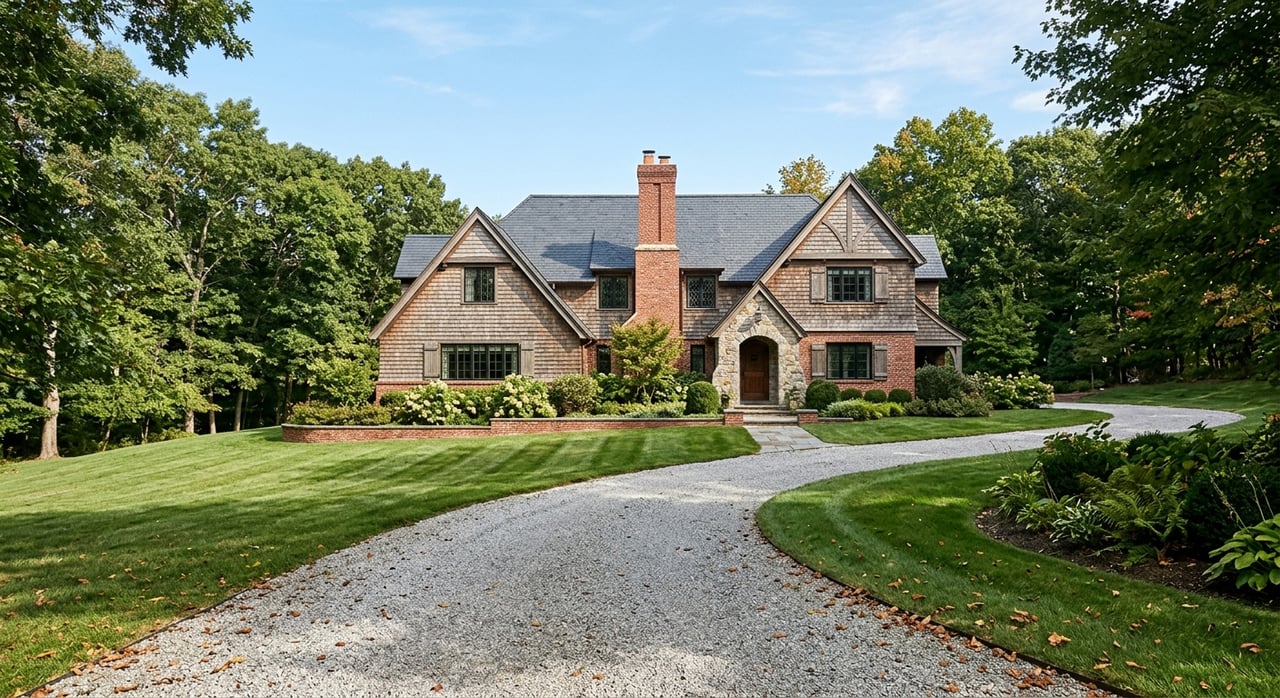
If you picture every larger-lot property as a classic farmhouse, the current market may surprise you. A recent snapshot of Oldham County acreage listings shows a mix of ranch-style homes, traditional homes, contemporary walkout ranch designs, and estate-style properties.
Some listings emphasize wooded acreage, privacy, or views of surrounding horse farms. While those examples reflect current listings rather than a permanent rule, they suggest that buyers in Goshen and nearby areas can expect variety instead of a one-style-fits-all market.
That variety also fits the county’s zoning framework. The ordinance allows single-family detached homes in districts such as AG-1 and CO-1, while AG-1 also includes agricultural uses, accessory dwelling units, home occupation standards, and other rural uses under the ordinance framework.
Financing a home on a larger lot can look different from financing a standard house on a smaller suburban parcel. The property may still qualify for common loan types, but site details often play a bigger role.
The USDA Single Family Housing Guaranteed Loan Program may be available for eligible primary residences in qualifying rural areas. USDA notes that the program can offer 100% financing for qualified borrowers and has no set acreage limits, but buyers should verify the specific address through the USDA eligibility tools rather than assuming a rural-looking property qualifies.
If you are using FHA financing, private well and septic systems may get closer review. HUD states in its Single Family Housing Policy Handbook that FHA-insured properties must be safe, sound, and secure, and it includes standards related to wells and septic systems.
For existing homes, HUD also lists minimum separation standards between wells and septic components. In some cases, water testing may be required, including situations where separation is less than 100 feet or where the well is near possible contamination sources.
Larger parcels often come with more moving parts before closing. That does not mean the process has to be difficult, but it does mean you should expect more due diligence.
Kentucky’s onsite sewage program runs through local health departments, which handle site evaluations and inspections. In Oldham County, the health department requires a septic permit application and a drawing of the proposed system, and private wells must be constructed, modified, or abandoned by a Kentucky-certified water well driller.
Oldham County Building & Inspections also notes that it does not issue plumbing, septic, or HVAC permits. Those items may involve different offices, including the county health department and state permitting systems, which can affect timing if repairs, upgrades, or approvals are needed.
Closing costs on acreage properties may be a little less predictable than on a typical subdivision purchase. Site-related questions, title review, appraisal issues, and utility verification can all affect the final numbers.
The Consumer Financial Protection Bureau says typical mortgage closing costs are about 2% to 5% of the purchase price, though costs vary based on the home, location, loan type, and lender fees. CFPB also notes that title insurance is a major closing fee and that buyers may be able to shop for some closing services where allowed.
CFPB further explains in its settlement cost booklet that appraisal results can change the Loan Estimate and your cash-to-close figures. On a larger parcel, that matters because site issues or repairs can sometimes create changes later in underwriting.
Before you write an offer on a larger lot in Goshen or nearby areas, make sure you have clear answers to these questions:
This is where having a detail-focused advisor can make a real difference. When a property has more land, the transaction often has more layers too.
Buying a larger-lot home in Oldham County can be exciting, but it also calls for careful review. The right property can give you space, privacy, and flexibility, but only when the land, utilities, zoning, and financing details all line up with your goals.
That is why a hands-on process matters. With the right guidance, you can sort through the property details early, ask better questions, and move toward closing with more confidence.
If you are exploring larger lots in Goshen, Prospect, Crestwood, La Grange, or nearby Oldham County communities, Ken Ransdell can help you evaluate the property itself, the transaction details, and the steps needed for a smoother closing.
Stay up to date on the latest real estate trends.

Trust him for down-to-earth, expert real estate guidance in Louisville. His local market savvy, strong negotiation skills, and personalized service make your buying or selling experience clear, confident, and rewarding—reach out to him today.